In-N-Out 100x100
I noticed in my SiteMeter logs that I was getting an abnormal number of hits today. And it looks like the famous In-N-Out 100x100 is making its way around the internet.
First, I noticed that someone referenced it about a month ago here (check out comment #43):
http://www.badmouth.net/in-n-outs-secret-menu/
But this week, it was stepped up a couple of notches. A couple of days ago, the people at la.foodblogging.com somehow got a hold of the picture (but didn't know about my blog at first). Check out their post here.
Next thing you know, it's cross posted in a couple of different places:
- ahamburgertoday.com
- livejournal.com
Hooray..everyone knows we're pigs!
With the new attention, I thought I would detail the whole In-N-Out 100x100 story.
It started innocently enough with a Halloween weekend in Vegas (2004). What started as a drunken, silly weekend..became quite legendary.
Throughout the weekend, Andy kept on saying: "We should go get a 100x100 at In-N-Out". Over..and over...and over again. Until we finally broke. So on Halloween night, we went to go chowdown.

The receipt 100x100 $97.66 - 1 Dbl/Dbl, 98 Extra patties
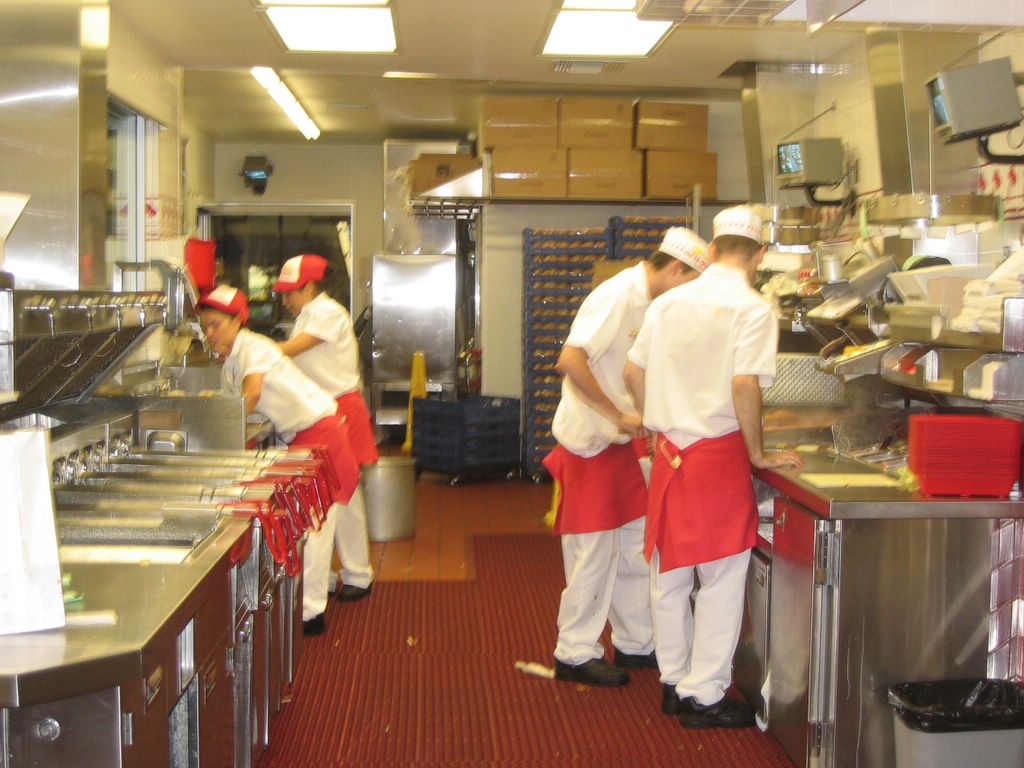
Furiously cooking the 100x100..they were shocked. They said the biggest order they had before this was the 24x24
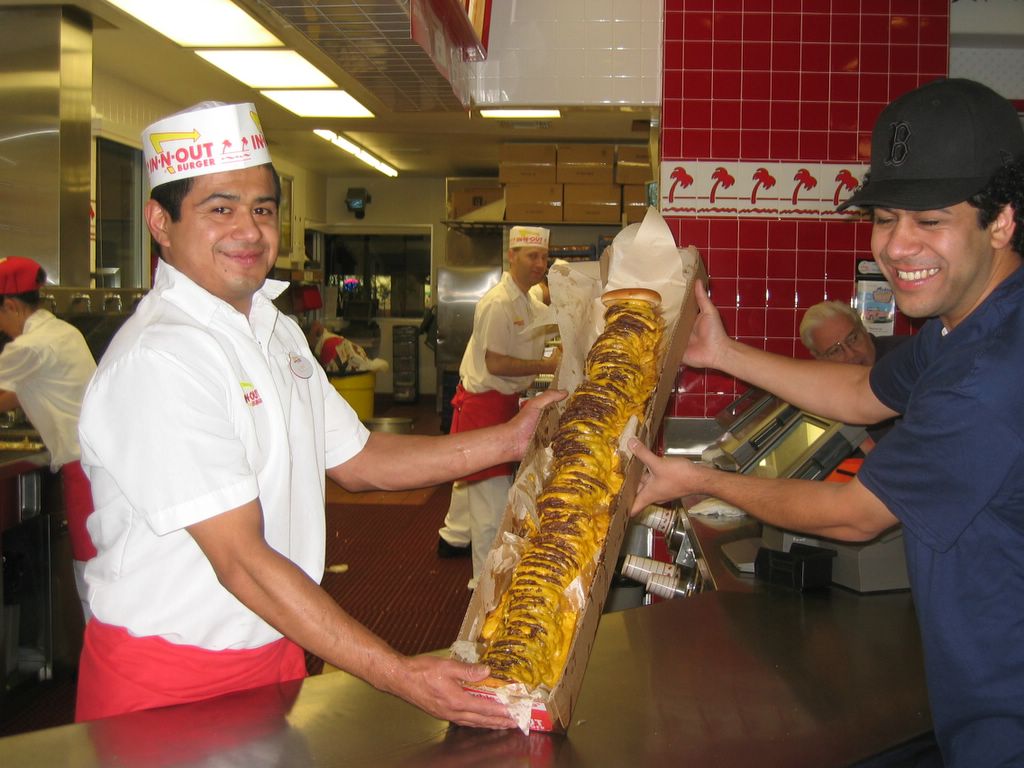
The Completed masterpiece
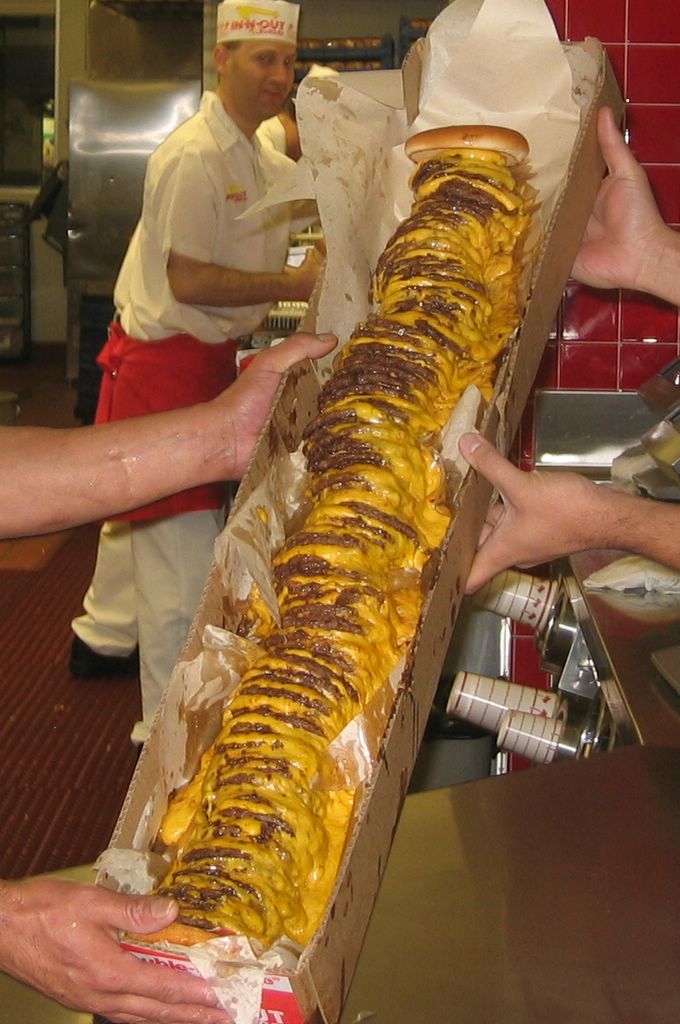
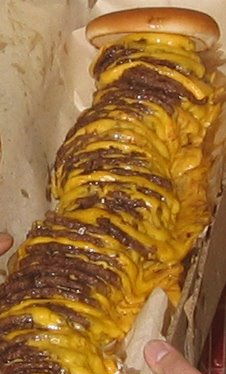
Close ups - they jury rigged a couple of boxes together
I need to stop right here. Please take a CAREFUL look the picture on the right. There is a common misperception that the 100x100 has a hundred buns. No, that's not true. It's one set of buns and ONE HUNDRED meat patties and ONE HUNDRED pieces of sweaty-oily cheese in between the buns. Clearly, the worst part of this experience wasn't the meat..it was the sweaty cheese.
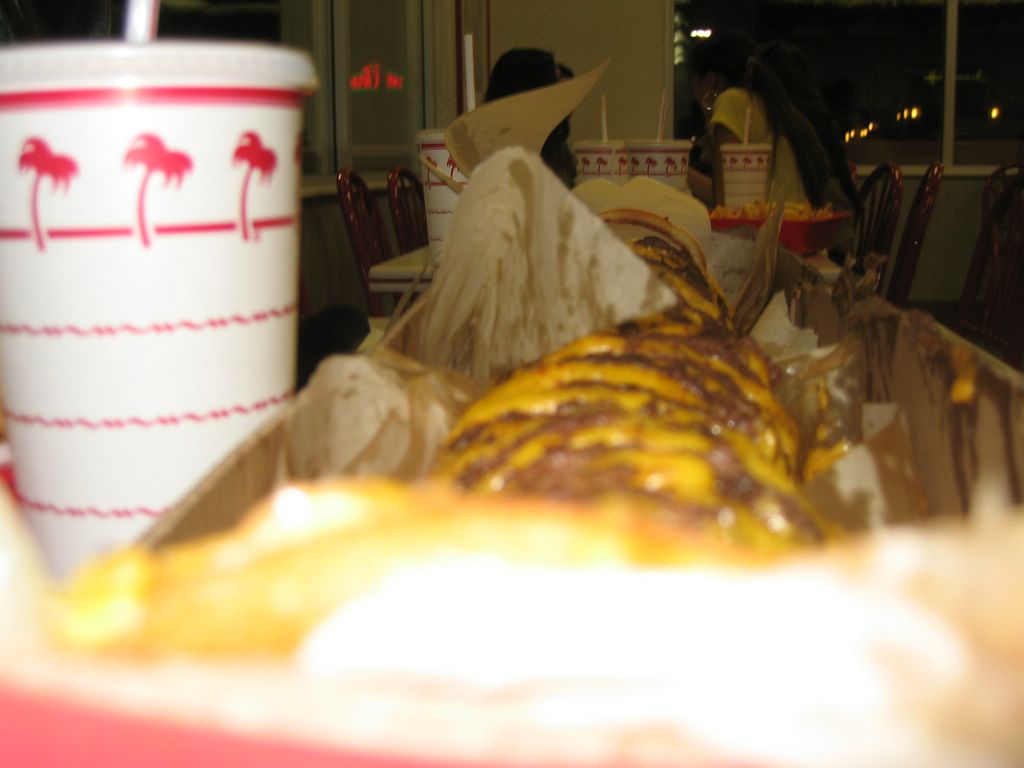
Horizontal view
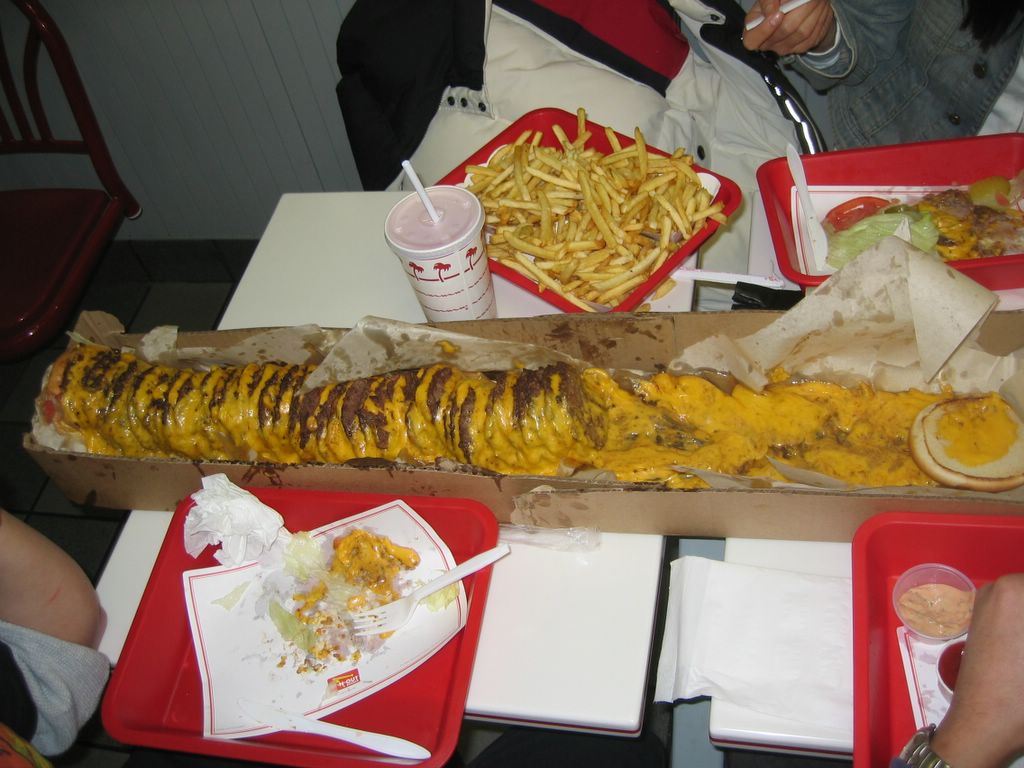
1/2 way done - just look the disgusting left over pool of cheese on the right

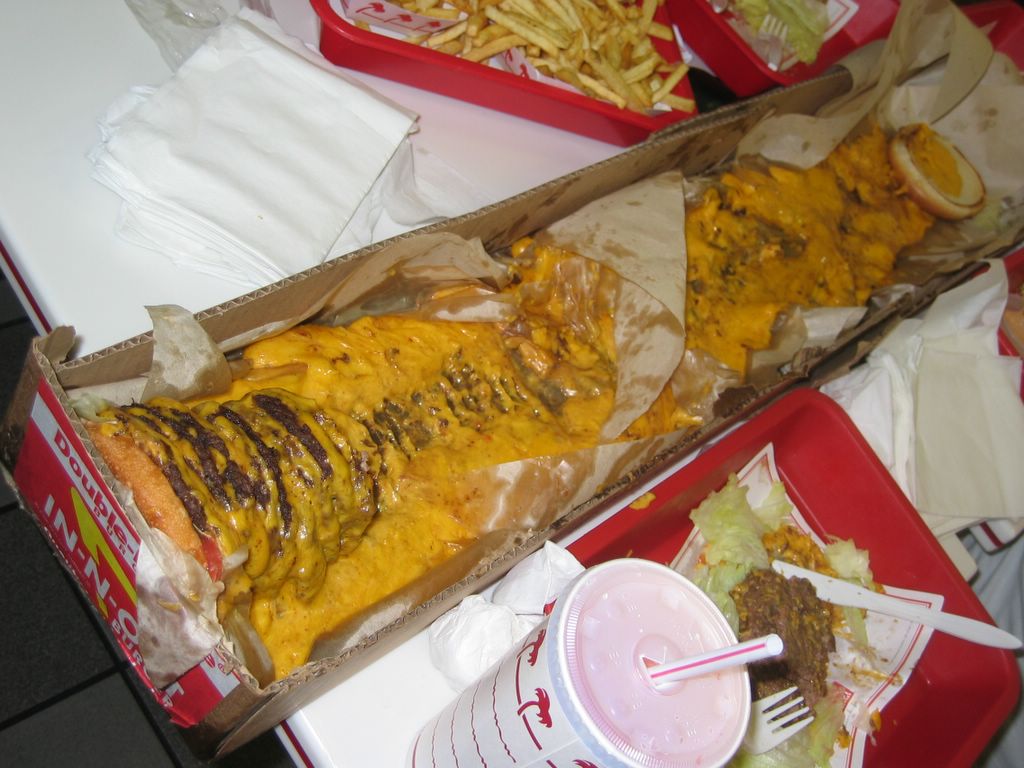


Thank God..we are almost done. 5 patties left.
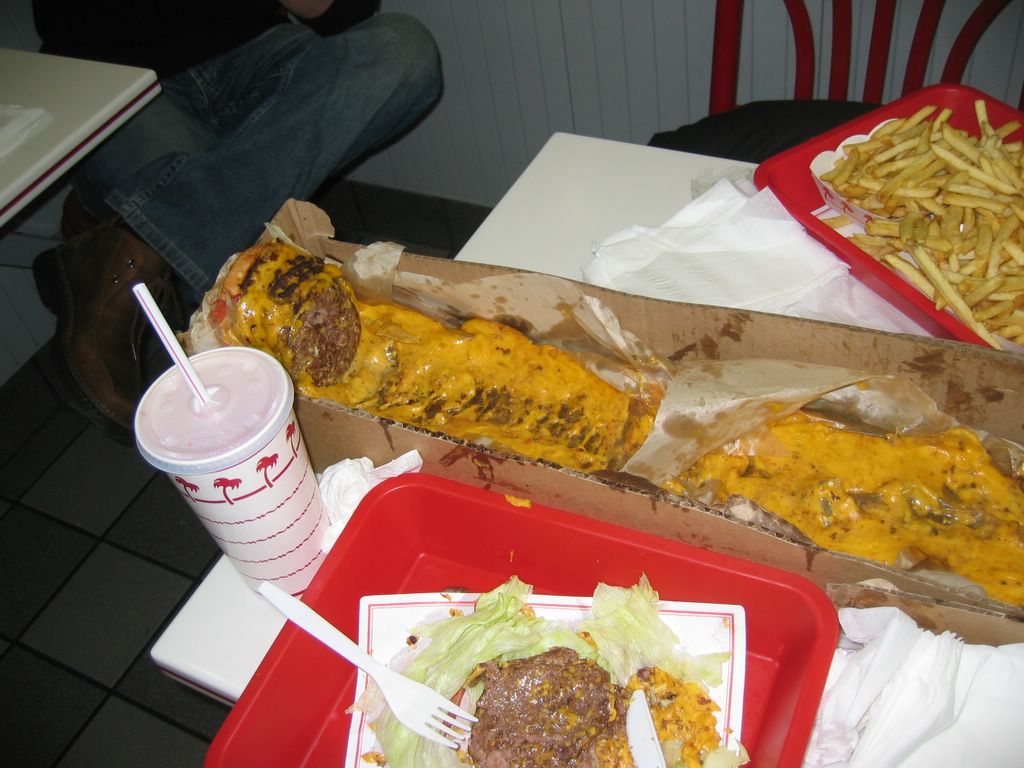
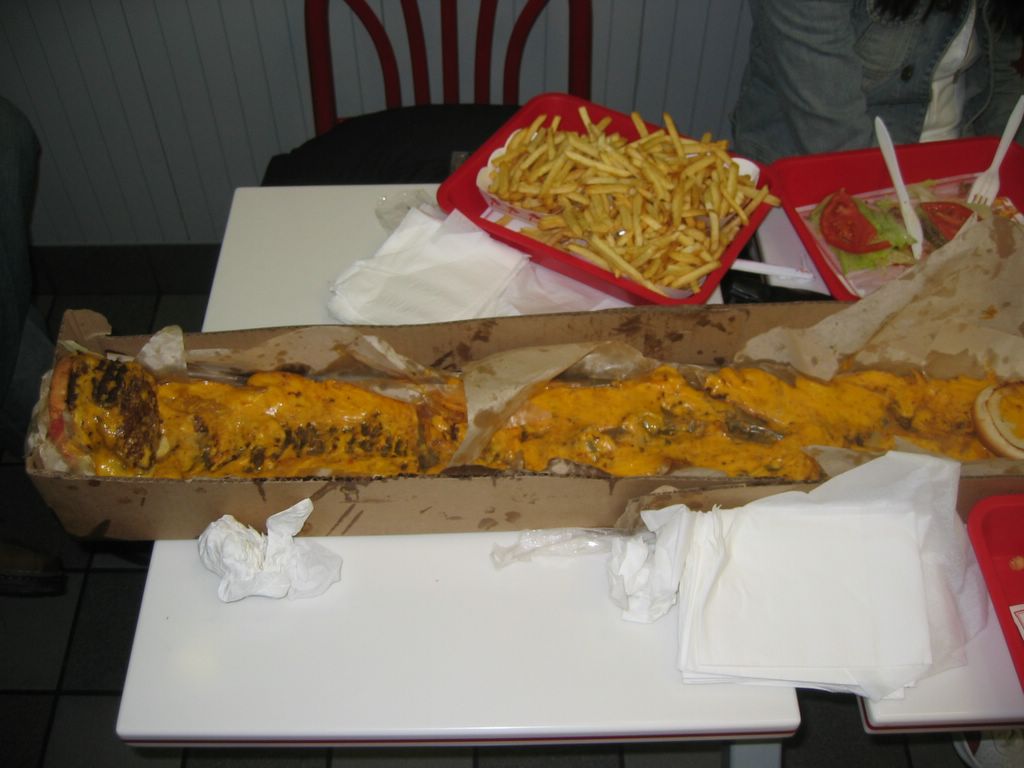
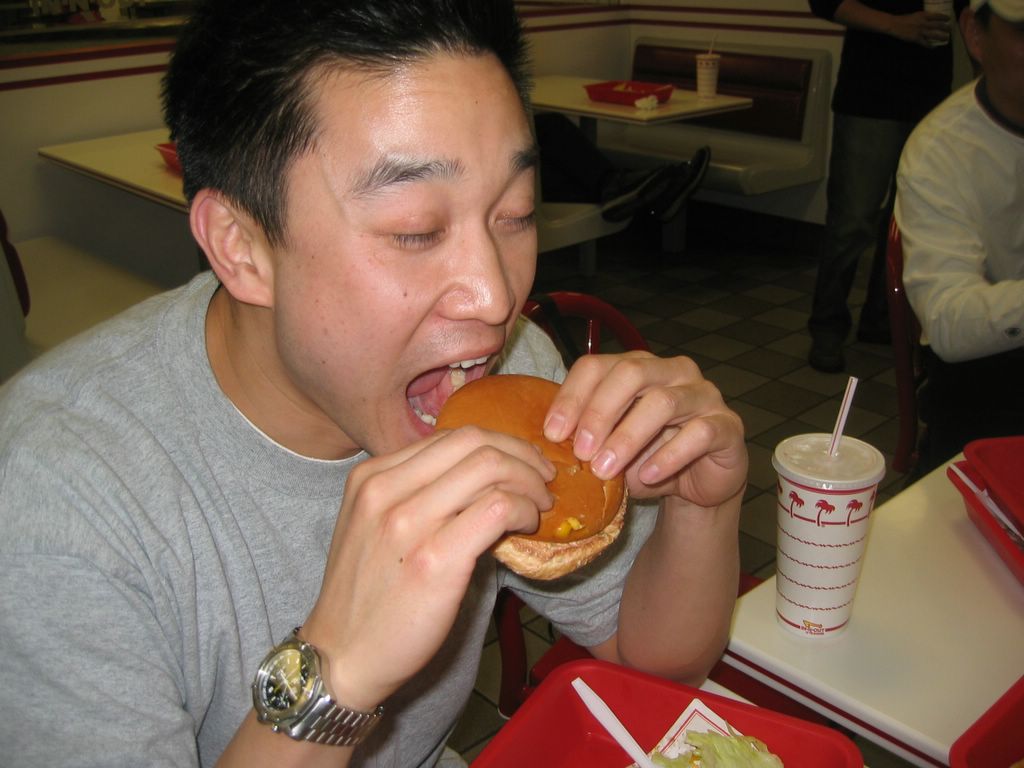
Now at this point...we all feel extremely sick. VERY sick. Disgusted. It's not quite because we are all full. But it's more a factor of just being completely disgusted and nauseated by the sweaty cheese. Can you blame us...
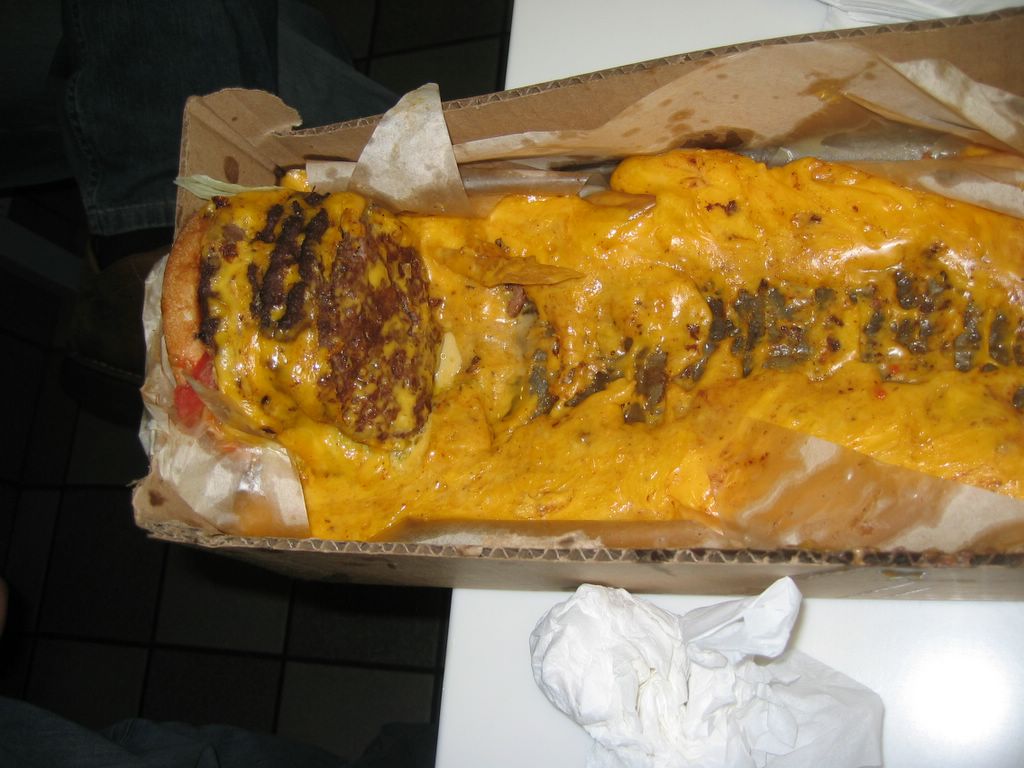
the final 5 patties
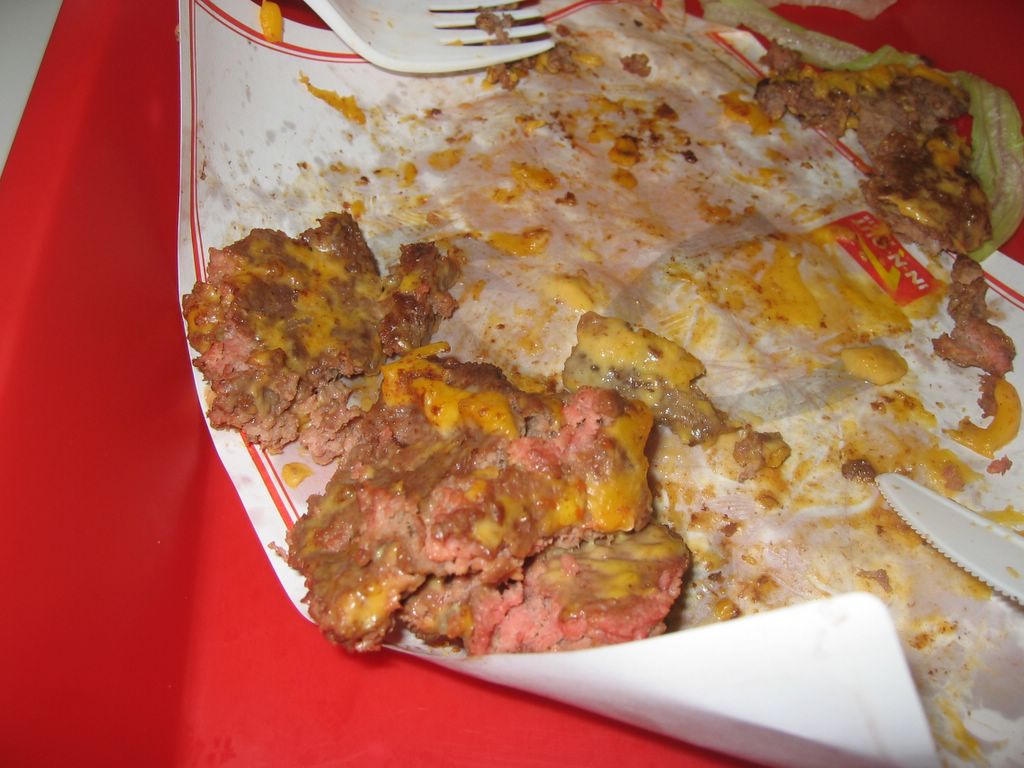
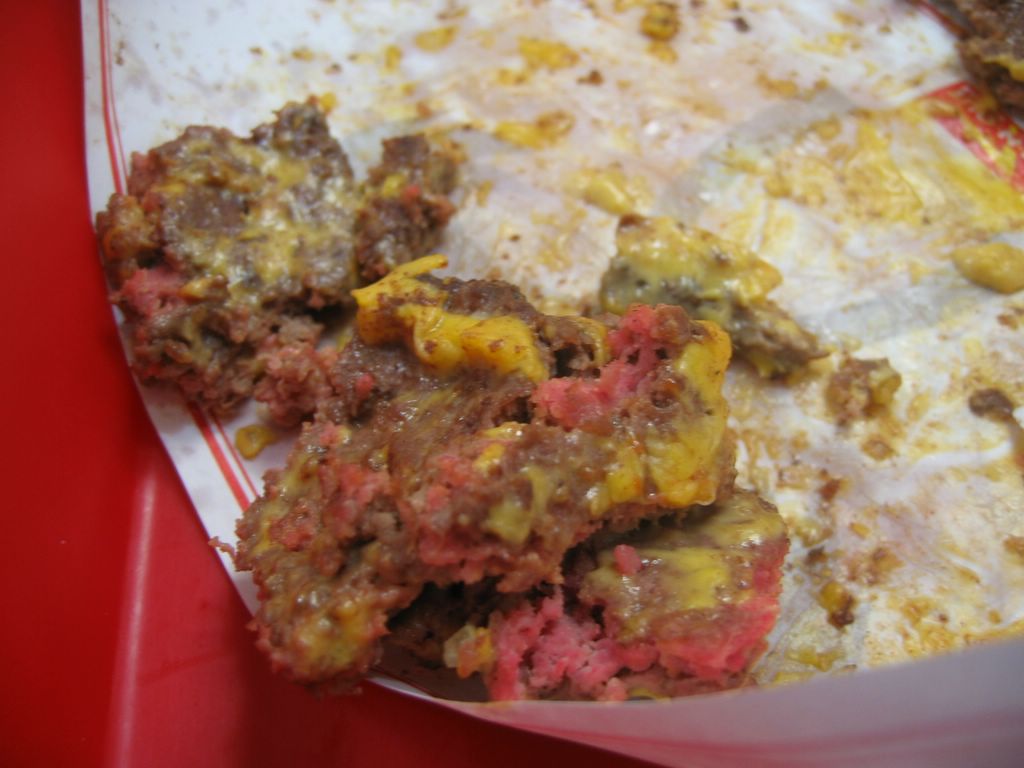
To make us feel even more disgusting....we hit a couple of raw patties near the end
But we finished! We rule in our fatness....

All that was left was..yup...the 2 EXTREMELY soggy and greasy buns.

Gross...was anyone actually going to eat that? Oh yes...we FORCED Andy to because it was his idea. Watching this almost made us barf.
And here is the victorious team with the great people at In-N-Out.

(The crew. And yes...the guy on the right is Tony, CEO of Zappos.com, The Web's Most popular shoe store. He doesn't normally dress like that...but it was Halloween. Go buy some shoes...once you buy online, you'll never go to the mall again for shoes. Free shipping. Free returns. Price protection.)

Here are a couple of interesting stats to summarize the experience:
- Total calories (extrapolating from info provided here): 19490 calories
- Total eaters 8 (2 girls and one guy who already ate dinner and only ate 6 patties)
- Most patties eaten by one person : I think I ate about 20. I think Nalin ate about 20 as well (including the raw ones)
- Time to finish : less then 2 hours
- Number of people who barfed : 1 (way to go Elena!)
The sad thing is, In-N-Out use to be one of my favorite things in the world. Now..the thought of it makes me sick and I haven't touched it since. :(
Update 1/29 - So this innocent little post has made us, as Chowmag.com describes us - "Internet-Enabled Legends". Maybe not quite legends, but it has made the last couple of days interesting. Details here. Also, we will be posting a quick video clip that we forgot we took that day.
Updated 1/31 - I just posted a quick video of us at In-N-Out that day...mildly interesting.
Updated 2/1 - Embarassingly enough, I was interviewed on the radio today for my love of sweaty cheese.
posted by whatupwilly @ 10:05 PM
251 comments


